
Key Takeaways
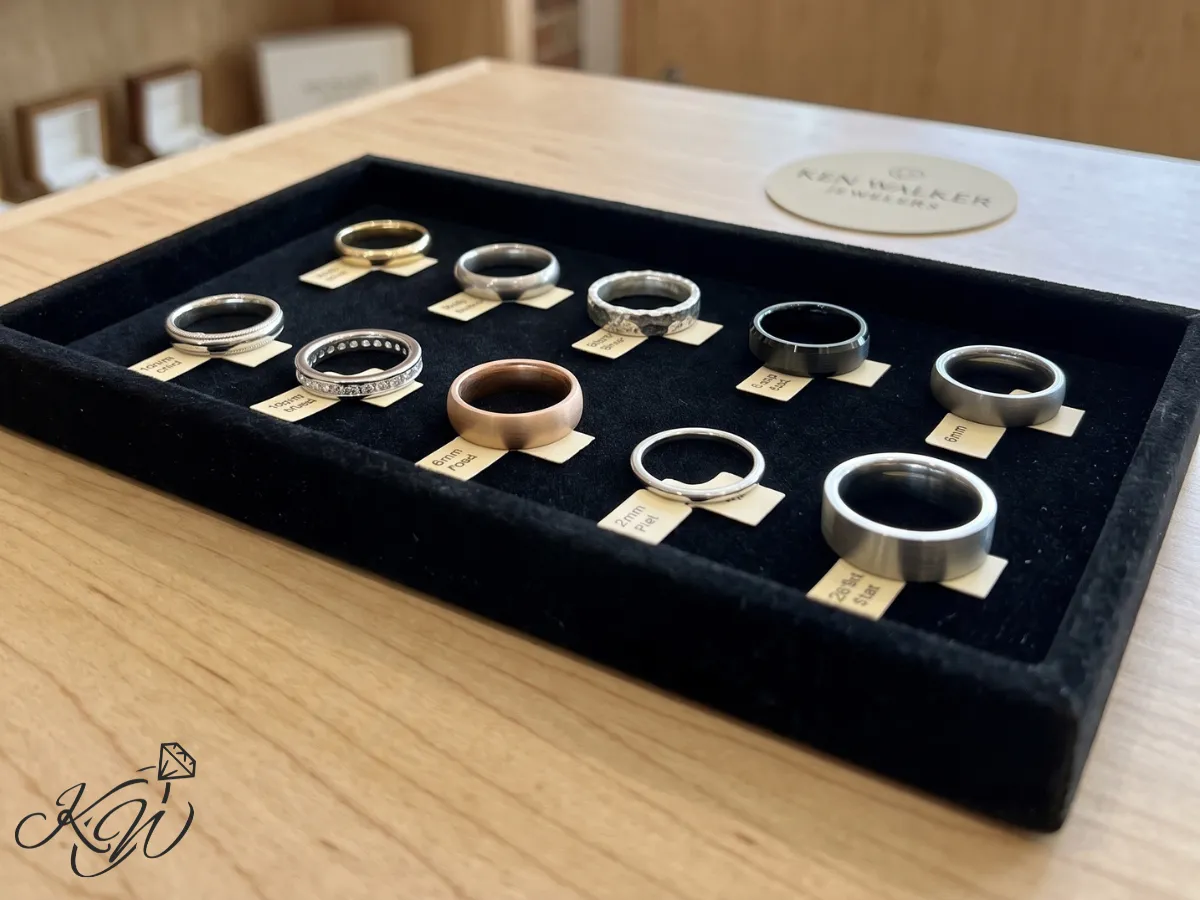
- Wider ring bands cover more skin surface, which makes them feel tighter than thin bands of the same numeric size.
- You often need to order a quarter to half size larger for ring bands that are 6mm wide or wider.
- Comfort fit rings feature a domed interior that allows wider bands to glide over knuckles easily.
- Stacking multiple thin bands creates the same skin friction as wearing one wide band.
- Finger size changes throughout the day based on temperature, activity, and humidity.
- Ken Walker Jewelers offers hands-on sizing support to help you find the right fit for any band width.
When you shop for a ring, you might assume your finger size stays the same across every jewelry style. However, the width of the band alters how a ring lies over your knuckle and sits against your skin. Finding the ideal balance of Fit & Comfort requires looking at both ring size and band width together.
At Ken Walker Jewelers, our family-owned shop has served our community for over 52 years. We know that a ring size that feels comfortable in a thin band can feel far too tight in a wide style. This guide breaks down how band width changes ring sizing, why width adjustments matter, and how to get an accurate measurement every time.
How Band Width Changes Finger Contact
A ring band sits directly against your skin like a band of fabric. The wider the metal band, the more surface area it covers on your finger. This extra contact changes how the ring feels during daily movement.
- Skin Drag and Friction: Thin bands touch very little skin, sliding past your knuckle with minor friction. Wide bands touch more skin surface, creating extra drag as you slide the ring on or off.
- Heat and Moisture Trapping: Wide bands cover more skin, trapping natural moisture and body heat underneath the metal. This extra warmth can cause your finger tissue to swell slightly.
- Tissue Displacement: When you bend your fingers, your skin and soft tissue naturally shift. A wide band restricts this tissue movement more than a delicate, thin band.
Because of these factors, two rings with the exact same inner diameter can feel completely different on your hand if their widths are not the same.
Narrow vs. Wide Bands: Sizing Differences
Different band widths require specific sizing choices to keep your hand feeling comfortable. Here is how common width categories behave on your finger.
Thin Bands (1mm to 3mm)
- Common Uses: Delicate engagement rings, thin stackable bands, and fine fashion jewelry.
- Sizing Behavior: Thin bands move past knuckles easily because they touch very little skin.
- Fit Recommendation: Order your standard finger size. If you plan to wear a thin band completely alone, it might even feel slightly looser than a standard medium band.
Medium Bands (4mm to 6mm)
- Common Uses: Classic wedding bands, traditional solitaire rings, and everyday band styles.
- Sizing Behavior: Medium bands balance surface contact and flexibility well for most finger shapes.
- Fit Recommendation: Bands up to 5mm usually fit true to your standard ring size. A 6mm band may require a quarter-size increase if you have larger knuckles or experience frequent hand swelling.
Wide Bands (7mm and Above)
- Common Uses: Bold fashion rings, heavy metal bands, and wide gents' wedding rings.
- Sizing Behavior: Wide bands cover significant finger area, creating noticeable skin drag and heat retention.
- Fit Recommendation: Most people need to order a half-size larger than their standard ring size to maintain a comfortable fit.
Ring Width Sizing Comparison Table
Use this reference table to see how band width changes your target size compared to a standard sizing gauge.
|
Band Width Range |
Typical Jewelry Styles |
Recommended Size Adjustment |
|
1mm to 3mm |
Stackable bands, thin solitaires |
Order standard size (or 1/4 size down if worn alone) |
|
4mm to 5mm |
Classic wedding bands |
Order standard size |
|
6mm to 7mm |
Wide classic rings, modern bands |
Order 1/4 to 1/2 size larger |
|
8mm and wider |
Statement bands, heavy gents' rings |
Order 1/2 size larger |
Pro Tip: Always test ring sizes using a sizing tool that matches the width of the ring you plan to buy. Sizing your finger with a thin metal wire will give an inaccurate result if you are purchasing an 8mm wide band.
Standard Fit vs. Comfort Fit Profiles
The interior shape of a ring band plays a key role in how width affects sizing. Jewelers craft rings using two main interior profiles: Standard Fit and Comfort Fit.
Standard Fit Interior
- The inside surface of the band is completely flat from edge to edge.
- The entire inner surface makes flat contact with your skin.
- Creates maximum friction, which makes wider bands feel much tighter.
- Almost always requires adding a half size for bands wider than 6mm.
Comfort Fit Interior
- The inside metal is crafted with a slight domed curve toward the skin.
- Only the center portion of the band presses firmly against your finger.
- Reduces edge pressure, allowing wide bands to slide smoothly over your knuckle.
- Often allows you to stay closer to your standard size, even on wide rings.
Key Insight: A 7mm wide ring with a comfort-fit interior may only require a quarter-size adjustment, while the same 7mm ring in a standard flat profile might require a full half-size increase.
How to Measure Your Finger for Different Widths
Getting a correct measurement helps make sure your new ring feels comfortable right from the start. Follow these clear steps when checking your ring size:
- Use the Correct Sizing Tool: Request wide sizing bands when measuring for wide rings. Narrow sizers do not accurately reflect the drag of a thick metal band.
- Check Your Size in the Afternoon: Hands tend to expand later in the day due to movement and ambient warmth. Measuring in the afternoon gives a safer, more reliable size.
- Account for Knuckle Size: If your knuckle is significantly broader than the base of your finger, measure both areas. Pick a size that slides over the knuckle with slight resistance without spinning freely at the base.
- Test Joint Movement: Once a sample sizing band is on your finger, make a tight fist and open your hand a few times. The band should not pinch your skin or stop your finger from bending.
- Factor in Seasonal Changes: Cold winter weather causes fingers to shrink slightly, while hot summer days cause fingers to swell. Leave enough space for these natural shifts.
Key Factors That Impact Daily Ring Comfort
Width is a key element, but several other design details change how comfortable a ring feels during daily wear.
- Stacking Multiple Rings: Wearing two, three, or four thin bands on one finger creates the total width of a wide ring. A stack of three 2mm bands will feel like a single 6mm band and may require a quarter-size increase.
- Metal Wall Thickness: The thickness of the metal walls (how far the ring sticks out from your finger) affects how neighbor fingers feel against the ring.
- Finger Shape: Tapered fingers allow wide bands to stay in place easily, while fingers with broad knuckles need extra care to balance knuckle clearance with base fit.
- Daily Work and Activity: Hand-heavy jobs, lifting weights, or frequent typing cause fingers to swell. Choosing a relaxed fit prevents discomfort during active hours.
Frequently Asked Questions
Should you size up for a wider ring?
Yes, in most situations you should select a quarter to half size larger for ring bands that are 6mm wide or wider. Wider bands cover more skin, which creates extra friction and makes the band feel tighter than a thin ring of the same size.
How does ring width affect daily wear?
Wider bands cover more skin and restrict tissue movement slightly more than narrow bands. They can also trap moisture or heat under the metal. Selecting the correct size adjustment makes sure wide bands remain comfortable for long periods.
Is comfort fit better for wide bands?
Comfort fit designs are very helpful for wide rings. The rounded inner surface reduces edge friction against your skin, making it much easier to slide wide metal bands over your knuckle.
Can wide rings be resized easily?
Resizing possibilities depend on the ring material and design. Plain gold or silver wide bands can usually be adjusted by a skilled goldsmith. However, patterned bands, full eternity diamond rings, or alternative metals like tungsten require accurate sizing before purchase.
How do ring stacks affect overall size?
When you stack multiple slim bands together on one finger, they cover a larger area of skin. The full set acts like one wide ring, so you may need a slightly larger size for the set to fit comfortably.
Finding Your Perfect Ring Size
Understanding how ring width changes size adjustments is the best way to choose a ring you will love wearing every day. Wide bands cover more skin and naturally feel snug, while narrow bands glide on with minimal effort. By choosing the right size adjustment for your preferred width and selecting a comfortable inner profile, you keep your ring sitting securely without pinching.
At Ken Walker Jewelers, we take pride in giving clear, honest advice to help you celebrate every milestone. Whether you want to measure for a custom wedding band, resize a family heirloom, or pick out a new daily stack, our team is ready to help you find the right fit.
Ready to find your ideal ring fit? Visit Ken Walker Jewelers today for friendly, hands-on sizing support.