
When you start shopping for your wedding jewelry, looking for the perfect diamond bands can feel a bit overwhelming. You want something that looks beautiful, fits your style, and lasts a lifetime. You also want to make sure you are getting the best value for your hard-earned money.
At Ken Walker Jewelers, we believe that buying jewelry should be a fun and stress-free experience. We want to help you understand what you are buying so you can make a choice that feels right for you.
One of the best ways to understand diamond quality is by learning about the 4Cs. This is the standard grading system used by jewelers everywhere. In this guide, we will break down how the 4Cs apply specifically to wedding bands. This knowledge will help you shop with confidence and find a ring you will love forever.
Key Takeaways
- Cut is King: The cut of the diamonds is the most important factor for making your wedding band sparkle.
- Consistency Matters: For bands with multiple stones, matching the color and clarity of the diamonds is more important than buying the highest grade.
- Save on Clarity: You can often choose lower clarity grades for small diamonds because flaws are invisible to the naked eye.
- Total Carat Weight: Understand that total weight is shared among all the diamonds in the band, which affects the price.
- Set Your Budget: Knowing how to balance the 4Cs helps you get the best-looking ring for your specific budget.
Understanding the 4Cs for Your Wedding Jewelry
The 4Cs stand for Cut, Color, Clarity, and Carat Weight. The Gemological Institute of America (GIA) created this system to grade diamonds objectively.
While many people learn about the 4Cs when buying a large solitaire engagement ring, the rules change slightly when you look at wedding bands.
Here is a quick look at what each of the 4Cs means:
- Cut: How well the diamond is cut, which determines how much it sparkles.
- Color: How white or colorless the diamond is.
- Clarity: The presence of tiny internal flaws (inclusions) or surface marks (blemishes).
- Carat Weight: The actual physical weight of the diamond.
Why Diamond Bands Need a Different Approach
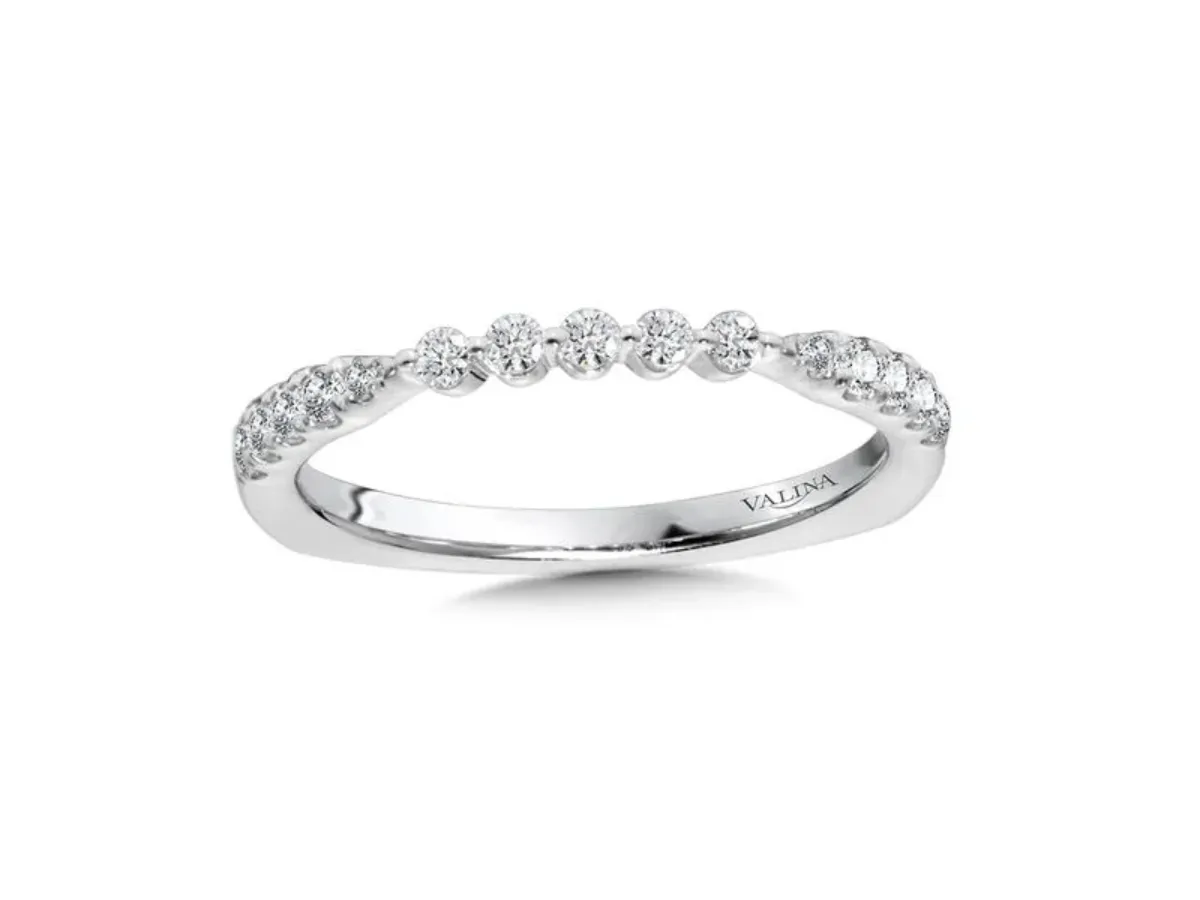
Most diamond bands feature several smaller stones set closely together rather than one large center stone. These smaller diamonds are often called "melee" diamonds.
Because the stones are smaller, you do not need to focus on the 4Cs in the exact same way you would for a large engagement ring. For example, a tiny flaw that is visible in a two-carat diamond will be completely invisible in a tiny diamond on a band.
Understanding these differences can save you a lot of money. It helps you avoid paying for high grades that you cannot even see with your eyes.
Cut: Making Your Band Sparkle
Cut is the most important of the 4Cs when it comes to sparkle. The cut does not refer to the shape of the diamond, such as round or oval. Instead, it refers to how well the diamond's facets reflect light.
When a diamond is cut with the correct proportions, light enters through the top, bounces around inside, and reflects back out to your eyes. This is what creates that beautiful flash of light.
If a diamond is cut too shallow or too deep, the light leaks out of the bottom or sides. This makes the diamond look dull and lifeless.
Ideal Cut: Light enters -> Bounces perfectly -> Reflects back out (High Sparkle)
Shallow Cut: Light enters -> Leaks out the bottom -> Looks dull
Deep Cut: Light enters -> Leaks out the side -> Looks dark
The Importance of Cut in Small Stones
For wedding bands, the cut is highly important. Because the diamonds in a band are small, they rely entirely on their cut to stand out.
- Excellent or Very Good: You should aim for diamonds graded as Excellent or Very Good. These cuts will make your band catch the light from across the room.
- Avoid Poor Cuts: Diamonds with poor cuts will look like gray, lifeless pebbles, no matter how clean or white they are.
- Setting Style: The way the diamonds are set also affects light. Prong settings allow more light to enter the stones than bezel settings, which wrap metal around the diamond.
Color: Keeping Your Band Consistent
Diamond color is graded on a scale from D to Z. The scale starts with D, which represents a completely colorless diamond. It goes all the way down to Z, which has a noticeable yellow or brown tint.
|
Color Grade |
Description |
What It Means for Your Band |
|
D - F |
Colorless |
Beautiful but expensive. Hard to tell the difference from near-colorless in small stones. |
|
G - J |
Near-Colorless |
Excellent value. The stones look white to the naked eye and cost much less. |
|
K - M |
Faint Yellow |
May show a slight warm tint, especially when set in white gold or platinum. |
|
N - Z |
Very Light to Light |
Noticeable yellow or brown color. Rarely used in classic wedding bands. |
Matching Diamond Colors Across the Band
When jewelers make diamond bands, they try to match the color of all the stones. This is because consistency is key.
If you have a band with ten diamonds, and nine of them are bright white while one is slightly yellow, your eye will immediately notice the odd one out.
- Aim for G-H or I-J: These grades offer the best balance of look and price. They look bright and white to the naked eye.
- Match Your Metal: If you choose a yellow gold band, you can easily go down to an I or J color. The warm metal makes the slight warmth in the diamonds blend in. If you choose white gold or platinum, stick to G or H color to keep the stones looking crisp and white.
Clarity: What Can You Actually See?
Clarity measures the purity of the diamond. Almost all diamonds have tiny natural marks inside them, which are called inclusions. They can also have scratches on the surface, known as blemishes.
The GIA clarity scale ranges from Flawless (no inclusions visible under 10x magnification) to Included (inclusions visible to the naked eye).
Choosing the Right Clarity Grade to Save Money
This is the area where you can save the most money when shopping for wedding bands.
Because the diamonds in a band are small, it is very hard to see inclusions without a jeweler's magnifying tool. You do not need to buy a Flawless or VVS (Very, Very Slightly Included) diamond band.
- SI1 and SI2 (Slightly Included): These grades are often the sweet spot for wedding bands. They are "eye-clean," meaning you cannot see any flaws with your naked eye, but they cost much less than higher grades.
- I1 (Included): In some cases, I1 diamonds can work well for very small stones. Just make sure the inclusions do not affect the strength of the stone or block too much light.
- Ask Your Jeweler: At Ken Walker Jewelers, we can help you look at the stones under magnification to make sure they are eye-clean and structurally sound.
Carat Weight: Understanding Total Carat Weight (TCW)
Carat is the measure of how much a diamond weighs. One carat is equal to 200 milligrams.
When you shop for a wedding band, you will often see the term "Total Carat Weight" or "TCW." This is different from the carat weight of a single stone.
- Total Carat Weight (TCW): This is the combined weight of all the diamonds in the ring. For example, if a band has five diamonds, and each diamond weighs 0.10 carats, the TCW of the band is 0.50 carats.
- Price Differences: A single 1-carat diamond is much rarer and more expensive than ten 0.10-carat diamonds. This means a 1-carat TCW wedding band will cost significantly less than a 1-carat solitaire engagement ring.
How TCW Affects Your Budget
The total carat weight has a direct impact on the price of your band. However, the style of the band also plays a role.
- Full Eternity Bands: These bands have diamonds going all the way around the ring. They have a higher TCW and cost more. They also cannot be easily resized.
- Half Eternity Bands: These have diamonds across the top half of the band. They offer a similar look when viewed from the top, have a lower TCW, cost less, and can be resized easily.
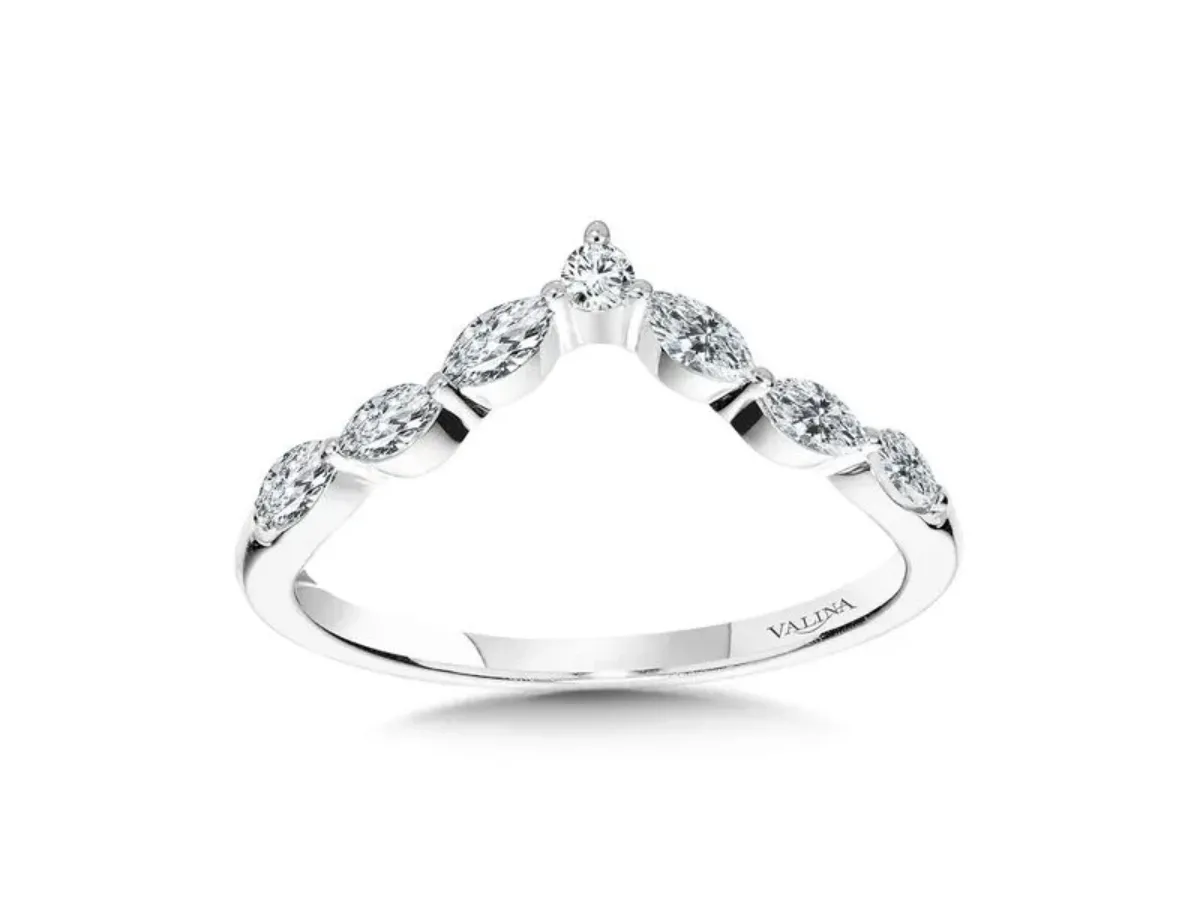
- Five-Stone or Seven-Stone Bands: These feature larger individual diamonds. While the TCW might be the same as a micro-pave band, the larger individual stones may cost slightly more because larger raw diamonds are harder to find.
Comparing Natural and Lab-Grown Options
When shopping for your band, you will also need to decide between natural diamonds and lab-grown diamonds. Both are real diamonds with the exact same chemical, physical, and optical properties. They are graded on the exact same 4Cs scale.
Here is a comparison to help you understand the differences:
|
Feature |
Natural Diamonds |
Lab-Grown Diamonds |
|
Origin |
Mined from the earth over billions of years. |
Grown in a laboratory over a few weeks. |
|
Rarity |
Limited supply, which helps hold value over time. |
Can be produced in unlimited quantities. |
|
Price |
Higher cost due to mining and rarity. |
More budget-friendly, often costing 50% to 70% less. |
|
Appearance |
Identical to lab-grown; indistinguishable to the naked eye. |
Identical to natural; indistinguishable to the naked eye. |
At Ken Walker Jewelers, we carry both options. We want to help you find the stone that matches your values and your budget without any pressure.
How to Balance the 4Cs for Your Budget
Your budget is a key factor when looking at diamond bands. The secret to getting the best value is knowing which of the 4Cs to prioritize and where you can compromise.
Here is our recommended strategy for buying a wedding band:
- Prioritize Cut: Always choose the best cut you can afford. This is what makes the ring sparkle. A well-cut diamond will look larger and brighter than a poorly cut diamond of a higher color or clarity grade.
- Go for Near-Colorless: Stick to G-H or I-J color grades. They look white to the eye, especially when set in metal, and save you a significant amount of money.
- Choose Eye-Clean Clarity: Look for SI1 or SI2 clarity. Do not pay for clarity grades you can only see under a microscope.
- Select the Right TCW: Choose a total carat weight that fits your hand and budget. If you want a larger look for less money, consider a half-eternity band or lab-grown diamonds.
FAQ
What is the most important C for diamond bands?
The most important C for wedding bands is Cut. Because the diamonds in a band are usually small, they need an excellent cut to reflect light and sparkle. A poor cut will make the band look dull and dark.
Can I mix lab-grown and natural diamonds in a band?
Yes, you can, but it is usually best to keep them consistent across the entire band. Since they look identical, mixing them will not affect the appearance of the ring, but keeping them uniform helps with future repairs or valuations.
How do I clean my diamond band at home?
You can clean your band by soaking it in warm water with a few drops of mild dish soap for 15 minutes. Gently scrub it with a soft-bristled toothbrush to remove dirt and oil, then rinse it with warm water and dry it with a soft cloth.
Does Ken Walker Jewelers offer custom diamond bands?
Yes. We specialize in custom jewelry designs. We can help you design a unique band from scratch or redesign heirloom jewelry so you can pass meaningful diamonds down to the next generation.
Conclusion
Buying a wedding band is a beautiful step in your journey together. By understanding how the 4Cs apply to diamond bands, you can make an educated choice that fits your style and budget perfectly.
Remember, you do not need to buy the highest grade in every category to get a gorgeous ring. Focus on a great cut, consistent color, and eye-clean clarity to get the most value for your money.
If you have questions or want to see these options in person, come visit us at Ken Walker Jewelers. Our friendly, knowledgeable team is here to give you honest, caring advice in a relaxed environment. We look forward to helping you find the perfect ring to celebrate your love.