
Quick Answer:
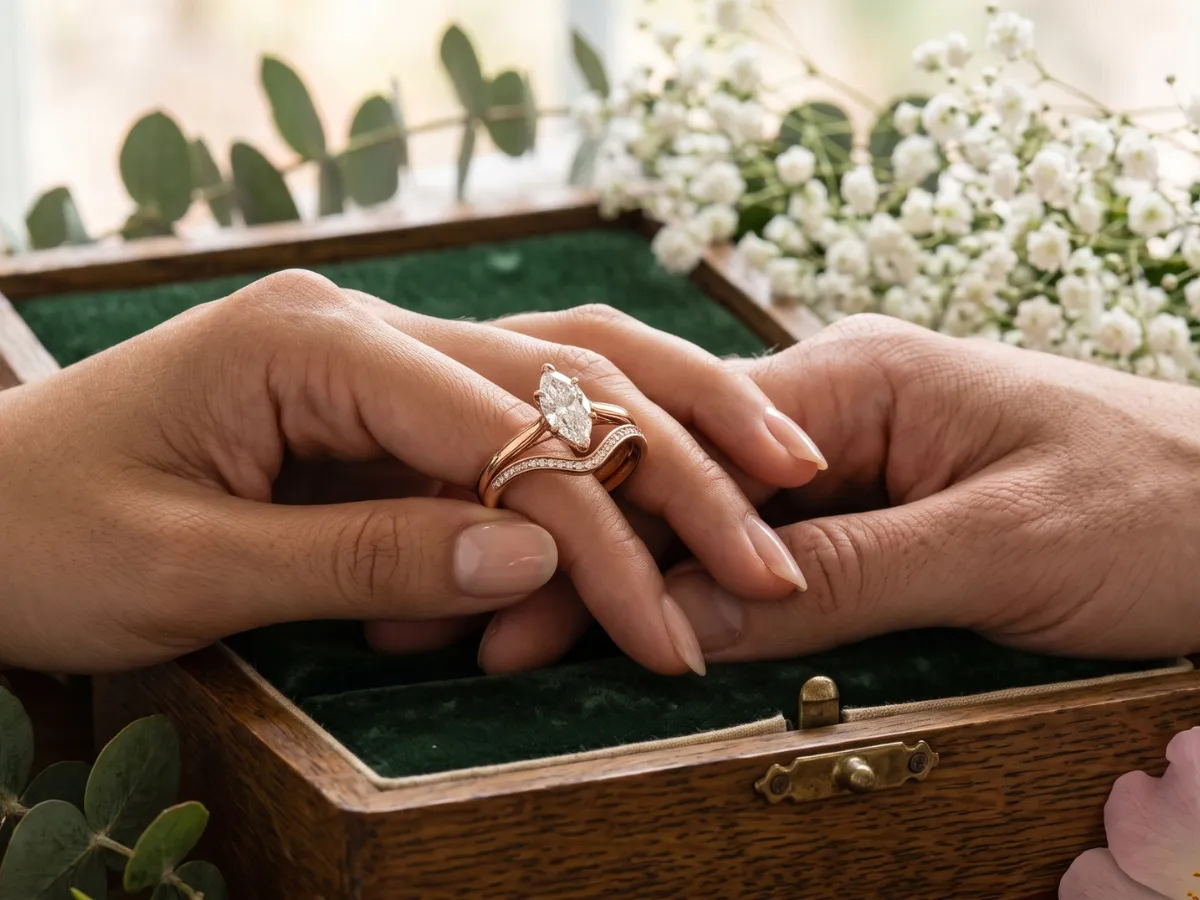
Curved wedding bands are designed to fit snugly against the curves of your engagement ring, while straight bands sit flat against your finger. When matching engagement rings, choosing the right wedding band shape depends on your ring's setting style and whether you want a flush fit or a gap between the two rings.
Your engagement ring is one of the most meaningful pieces of jewelry you'll ever own. Once you've said yes, the next decision is picking a wedding band that pairs perfectly with it. At Ken Walker Jewelers, we help customers understand how to choose between curved and straight wedding bands so your two rings look intentional, comfortable, and beautiful together for a lifetime.
Table of Contents
- Key Takeaways
- Understanding Curved vs Straight Wedding Bands
- Understanding Wedding Band Styles
- How Matching Engagement Rings Work with Curved Bands
- Straight Wedding Bands and Engagement Ring Pairing
- Your Engagement Ring Shape Matters
- The Comfort Factor in Your Daily Wear
- Stacking and Visual Appeal
- Budget-Friendly Options for Matching Bands
- Making Your Final Decision
- Frequently Asked Questions
- Conclusion
Key Takeaways
- Understand the difference between curved bands (contoured to fit engagement ring settings) and straight bands (flat metal rings) to make an informed matching decision.
- Consider your engagement ring's setting style, as solitaire and halo settings pair best with different band shapes.
- Test both options on your finger to see how comfortable each feels and how the rings sit together.
- Learn why matching engagement rings with the correct band shape prevents damage and keeps your jewelry secure.
Understanding Curved vs Straight Wedding Bands
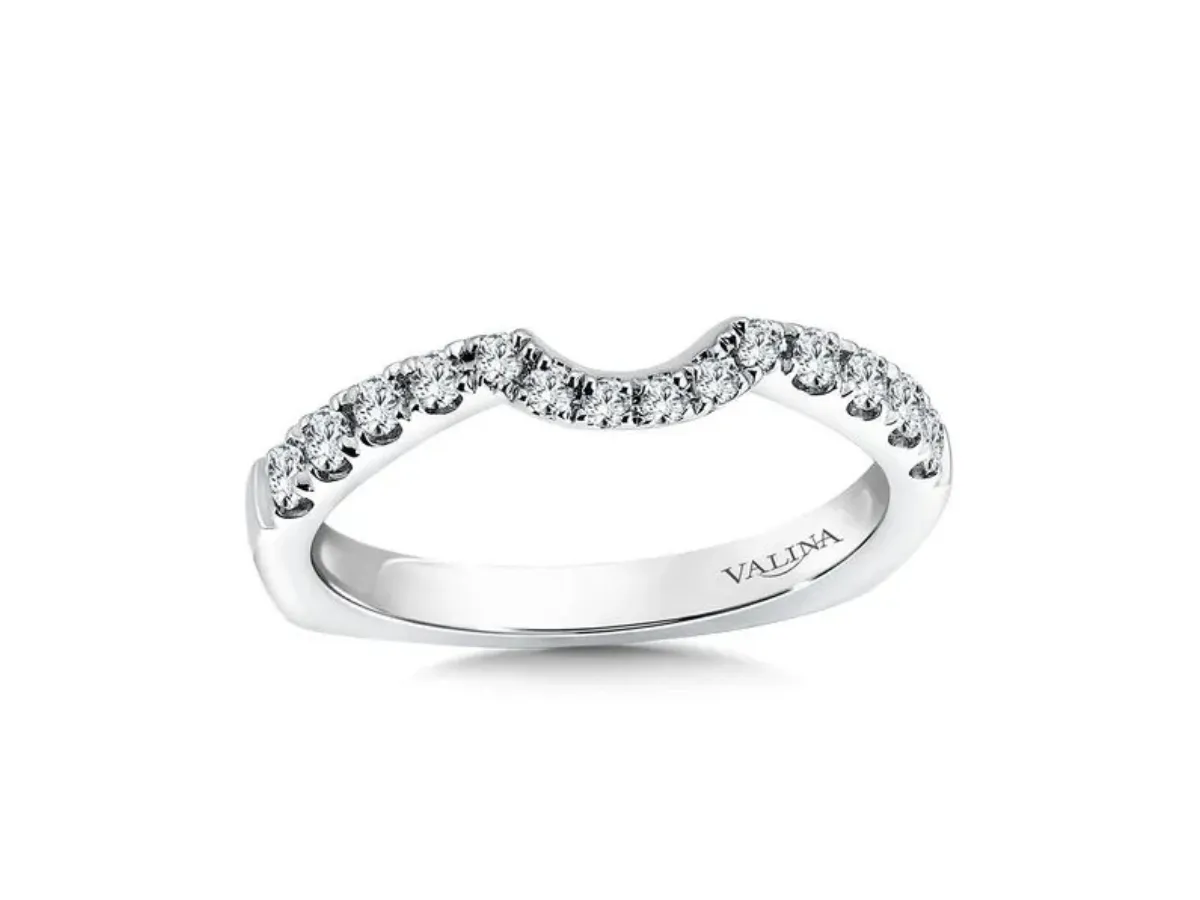
A curved wedding band follows the natural contour of your engagement ring's setting. These bands are specially designed with an indentation or curve that allows them to nestle against the sides of your engagement ring. The result is a seamless, fitted appearance where the two rings sit close together without gaps.
A straight wedding band is a traditional, flat metal ring that sits parallel to your finger. When paired with certain engagement rings, a straight band may sit slightly away from the setting, creating a visible space between the two rings. This gap is sometimes intentional and considered an elegant design choice.
Key Insight
The shape of your wedding band directly affects how your rings sit together on your finger. Choosing the wrong shape can create uncomfortable gaps, put pressure on your engagement ring setting, or make your rings move around more than they should.
Understanding Wedding Band Styles
A curved wedding band and a straight wedding band sit against your engagement ring in very different ways, and choosing between them is one of the most important decisions when matching engagement rings.
Straight bands have a flat or level surface that runs parallel to your finger. They sit at a right angle to your engagement ring's stone, creating a distinct line between the two rings. This style works well if you like your rings to maintain separate identities or if your engagement ring has a lower or more modest setting.
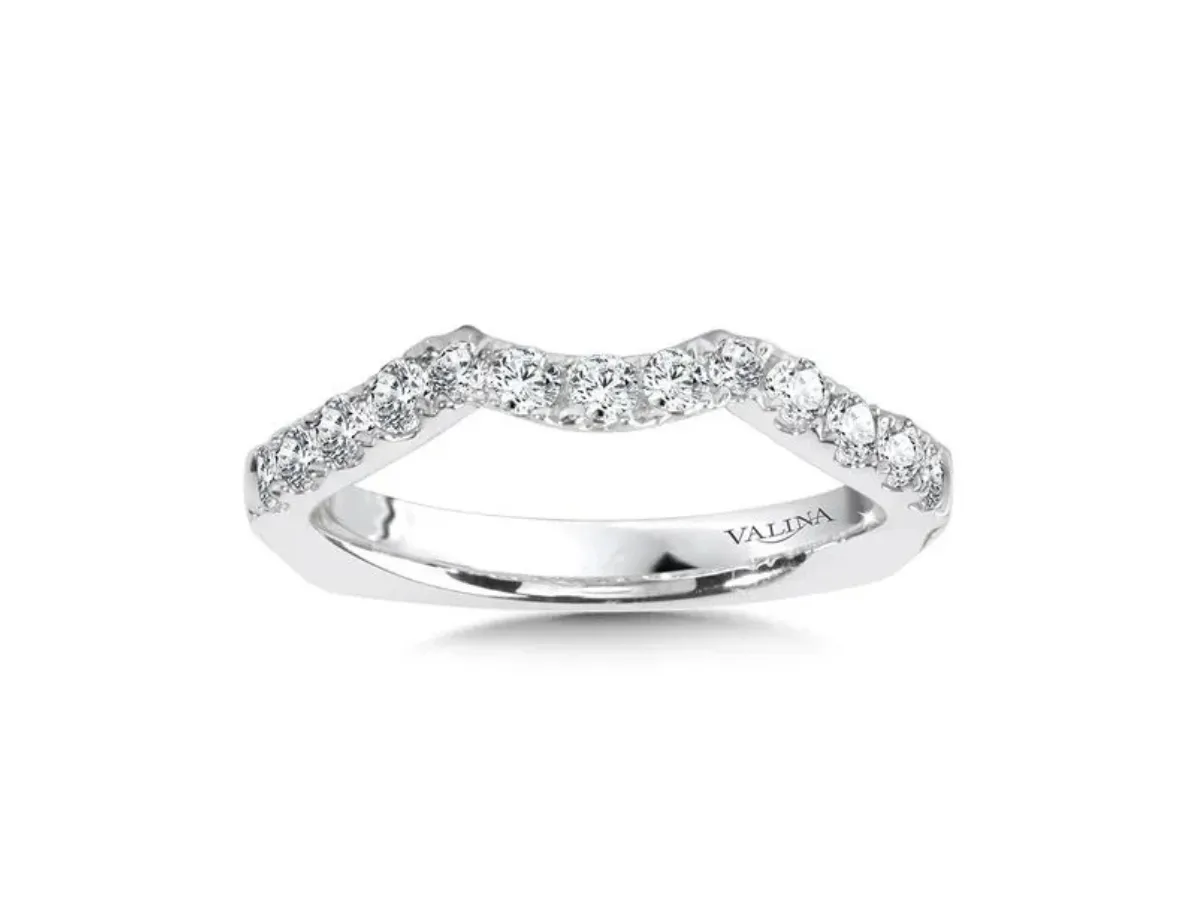
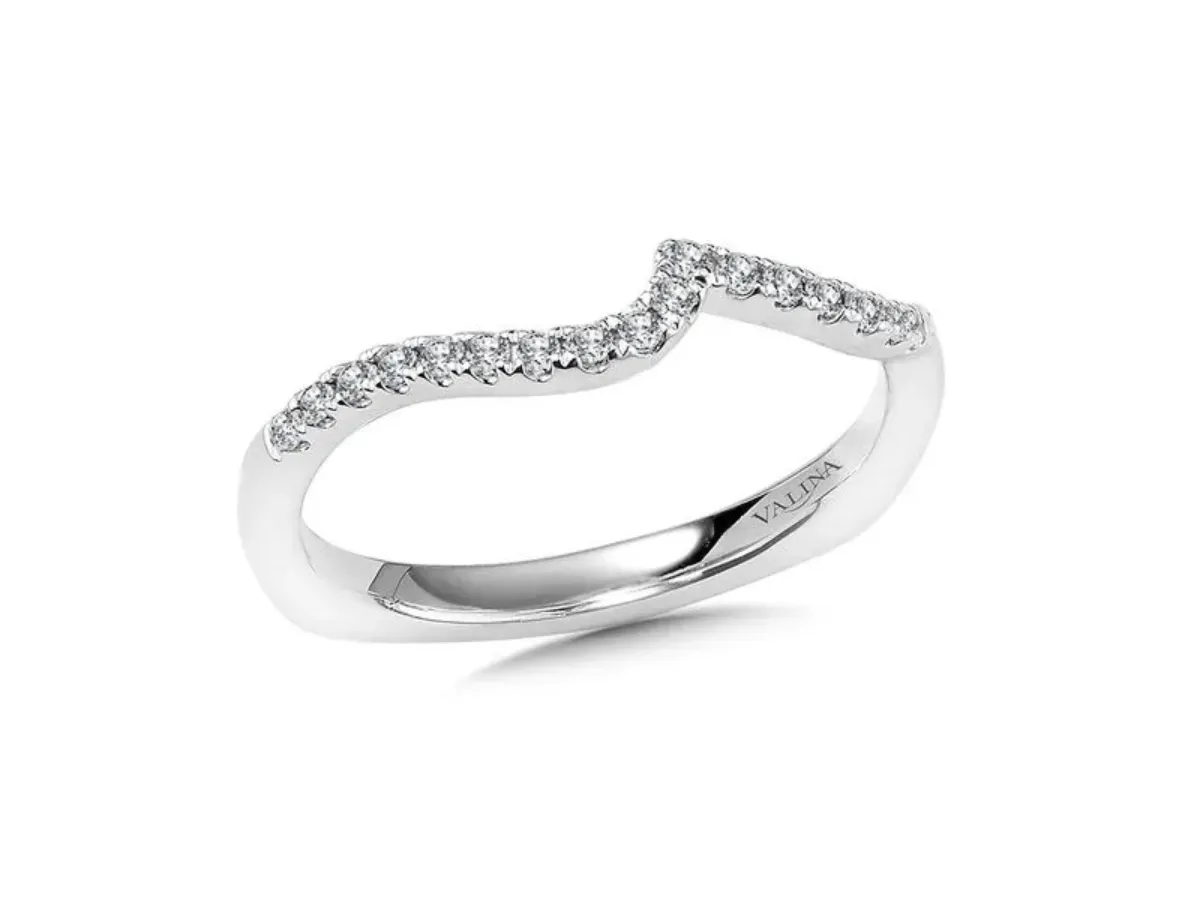
Curved bands, also called contoured bands, feature an inward curve or dip along their surface. This curve is designed to follow the shape of your engagement ring's setting, nestling closely against it. When you wear a curved band with a matching engagement ring, the two pieces fit together like puzzle pieces, sitting flush and close to your hand.
Key Insight
Your choice between curved and straight bands affects how your rings look together and how comfortable they feel when worn as a set.
The right choice depends on your engagement ring's setting height, your personal style, and how you want the rings to interact visually. Both styles are popular, and both can be beautiful when paired correctly with your engagement ring.
How Matching Engagement Rings Work with Curved Bands
Curved wedding bands fit perfectly beside many engagement ring shapes because they follow the natural angle of your center stone. When you choose a matching engagement ring with a curved band, the two rings nestle together without gaps or awkward spacing. This creates a polished look that feels intentional and complete.
Your engagement ring's shape determines how well a curved band pairs with it. Round and oval stones work beautifully with curved bands because the gentle arc mirrors the stone's shape. Cushion and radiant cuts also benefit from curved bands, which help the rings sit flush against one another.
Key Insight
A curved band can reduce the visible gap between your engagement ring and wedding band, making your rings appear as a single, unified piece.
The real advantage is comfort and appearance combined. Your fingers are naturally curved, so curved bands follow that contour. When your rings fit snugly together without twisting or shifting, you'll notice the difference immediately. You'll find yourself admiring how your matching engagement rings look and feel throughout your day.
Straight Wedding Bands and Engagement Ring Pairing
Straight wedding bands are rings with no curve or contour and sit completely flat against your finger. When you pair a straight band with your engagement ring, you need to understand how the two rings will sit together and whether they will touch or have visible gaps between them.
Your engagement ring's shape matters greatly when matching engagement rings with a straight band. Solitaire rings with round or cushion-cut stones typically have a flat bottom, so a straight band will sit flush against it with minimal gaps. However, rings with raised center settings or prominent gallery designs may create noticeable space between the two bands.
|
Engagement Ring Style |
Fit with Straight Band |
Typical Gap |
|
Round Solitaire |
Flush or minimal gap |
Little to none |
|
Cushion or Oval Solitaire |
Flush or minimal gap |
Little to none |
|
Three-Stone Setting |
Noticeable gap |
Moderate |
|
Vintage or Ornate Setting |
Noticeable gap |
Moderate to large |
Key Insight
Many couples choose to wear their engagement ring and straight band together as a matching set. If gaps concern you, a curved or contoured band may fit your ring more closely.
At Ken Walker Jewelers, we help you visualize how your rings will look together before you decide. Bring both rings in, and we can show you exactly how much space appears between them so you can make the choice that feels right for you.
Your Engagement Ring Shape Matters
The shape of your engagement ring is one of the most important factors when choosing a matching wedding band. Different ring shapes pair better with either curved or straight bands, so understanding these combinations helps you create a cohesive look that feels right for you.
|
Ring Shape |
Best Band Style |
Why It Works |
|
Round |
Curved or Straight |
Versatile; works with both styles |
|
Oval |
Curved |
Follows the elongated contour |
|
Cushion |
Curved |
Complements rounded corners |
|
Emerald |
Straight |
Enhances geometric lines |
|
Asscher |
Straight |
Emphasizes clean angles |
|
Marquise |
Curved |
Balances pointed ends |
Key Insight
Curved wedding bands hug round and soft-cornered stones, while straight bands accent angular, geometric shapes. Choose the band style that mirrors your stone's lines for a polished, intentional appearance.
The Comfort Factor in Your Daily Wear
Curved and straight wedding bands feel noticeably different on your finger, and this difference matters for long-term wear. A curved band is designed to wrap around the contours of your finger, following the natural shape of your hand. A straight band sits flat against your skin without conforming to your finger's curves.
When you are matching engagement rings with a wedding band, comfort becomes essential. You will wear this ring every single day for years, so how it feels matters just as much as how it looks. A curved band typically feels smoother and less likely to shift or rotate throughout your day. Straight bands may feel more stable if your engagement ring has a solitaire setting, but they can sometimes feel slightly less comfortable if there is a gap between the two rings.
Key Insight
Your comfort preference often depends on your lifestyle. If you work with your hands or stay active, you may prefer a curved band that stays secure. If you prefer a more structured, defined look between your rings, a straight band could be your choice.
At Ken Walker Jewelers, we recommend trying both styles on your hand before deciding. Your finger's unique shape and your daily activities should guide your decision.
Stacking and Visual Appeal
The way your curved and straight bands look when worn together depends on which style you choose for matching engagement rings. Your decision affects how the two rings sit on your finger and the overall appearance of your ring stack.
A curved band wraps around your engagement ring in a gentle arc. This creates a smooth, flowing look where the wedding band nestles snugly against the base of your engagement ring. The two rings blend together visually, appearing almost like a single piece of jewelry.
A straight band sits flat and parallel to your engagement ring. This creates distinct separation between the two rings, with a small gap visible between them. The straight style gives you a more modern, architectural look that emphasizes each ring as its own statement piece.
Key Insight
Your personal style matters more than tradition. Choose whichever look feels right for how you want to present yourself and your engagement ring to the world.
|
Band Style |
Visual Effect |
Best For |
|
Curved |
Smooth, unified appearance |
Vintage or romantic preferences |
|
Straight |
Separate, distinct rings |
Modern or minimalist tastes |
Budget-Friendly Options for Matching Bands
You can achieve matching engagement rings without spending top dollar by choosing affordable materials and smart design strategies. Matching bands do not require expensive metals or stones to look cohesive and beautiful together.
Consider these cost-saving approaches when selecting your curved or straight wedding band to pair with your engagement ring:
|
Material Option |
Price Range |
Best For |
|
Moissanite |
Lower cost than diamond |
Matching bands with sparkle and durability |
|
Cubic Zirconia |
Very affordable |
Budget-conscious pairs wanting immediate sparkle |
|
Sterling Silver |
Lower metal cost |
Curved or straight bands with classic appeal |
|
Gold-Plated Bands |
Budget-friendly |
Matching the look of solid gold affordably |
Key Insight
You can pair a diamond or moissanite engagement ring with a simple, affordable band in a complementary metal to create a coordinated look that feels intentional and personal.
At Ken Walker Jewelers, we work with customers at all budget levels to find matching engagement rings that feel right for your relationship and your wallet. Simple straight bands paired with modest stones offer tremendous value without sacrificing beauty or meaning.
Making Your Final Decision
Your choice between a curved wedding band and a straight wedding band comes down to your personal style, your engagement ring design, and how you live your daily life.
Start by looking at your engagement ring. If your ring has a rounded or solitaire setting, a curved band often looks more natural and flows with the stone. If your ring has a square or geometric shape, a straight band may complement it better. Think about what feels right when you hold your hand up to the light.
Consider your lifestyle too. Do you work with your hands, play sports, or garden regularly? A straight band may feel more practical. If you prefer a polished, coordinated look and want your engagement and wedding rings to sit flush together, a curved band is usually your best choice.
Key Insight
There is no wrong answer. At Ken Walker Jewelers, we help you try both styles so you can see what makes you happy when you wear it every day.
Take your time with this decision. Your wedding band will be with you for decades, so choose the one that feels like it was made for your hand.
Frequently Asked Questions
Should my wedding band be curved or straight if I have a solitaire engagement ring?
A curved wedding band is often the better choice for matching engagement rings with a solitaire setting because it wraps around the center stone and creates a seamless look. A straight band will sit next to your solitaire but may leave a small gap between the two rings, so choosing curved gives you that connected appearance many people prefer.
Can I wear a curved wedding band with a straight engagement ring or vice versa?
Yes, you can absolutely mix a curved band with a straight engagement ring, though they won't fit together as closely. Many people enjoy this look because it adds visual interest and allows each ring to stand on its own while still coordinating as a set.
Do curved wedding bands cost more than straight wedding bands?
Curved bands typically cost a bit more than straight bands because they require extra craftsmanship and metal to achieve that contoured shape. However, the price difference is usually modest, and both options are available at different price points depending on the metal and design you choose.
How do I know if my engagement ring will look good with a curved wedding band?
The best way to find out is to visit a jeweler like Ken Walker Jewelers where you can try different band styles next to your actual engagement ring. Your jeweler can show you how curved and straight options look together and help you decide which matches your personal style and the shape of your setting.
What is the difference between a contoured band and a curved band?
Contoured bands and curved bands are similar terms, but contoured specifically means the band is shaped to match the curve of your engagement ring setting so the two rings sit flush against each other. A curved band has a gentle bend but may not fit as perfectly as a custom contoured design made specifically for your ring.
Conclusion
Choosing between curved and straight wedding bands comes down to your personal style and how you want your matching engagement rings to look together. Both options work beautifully with most engagement ring designs. Take time to try on different combinations and see which pairing makes you feel most comfortable and confident wearing it every day.
At Ken Walker Jewelers, we are here to help you find the perfect wedding band to complement your engagement ring. Our team has been serving our community for over 50 years, and we would love to help you celebrate this important milestone. Stop by our shop to see curved and straight bands side by side, or call us to discuss your options. We look forward to working with you to create a pairing that you will treasure for a lifetime.