
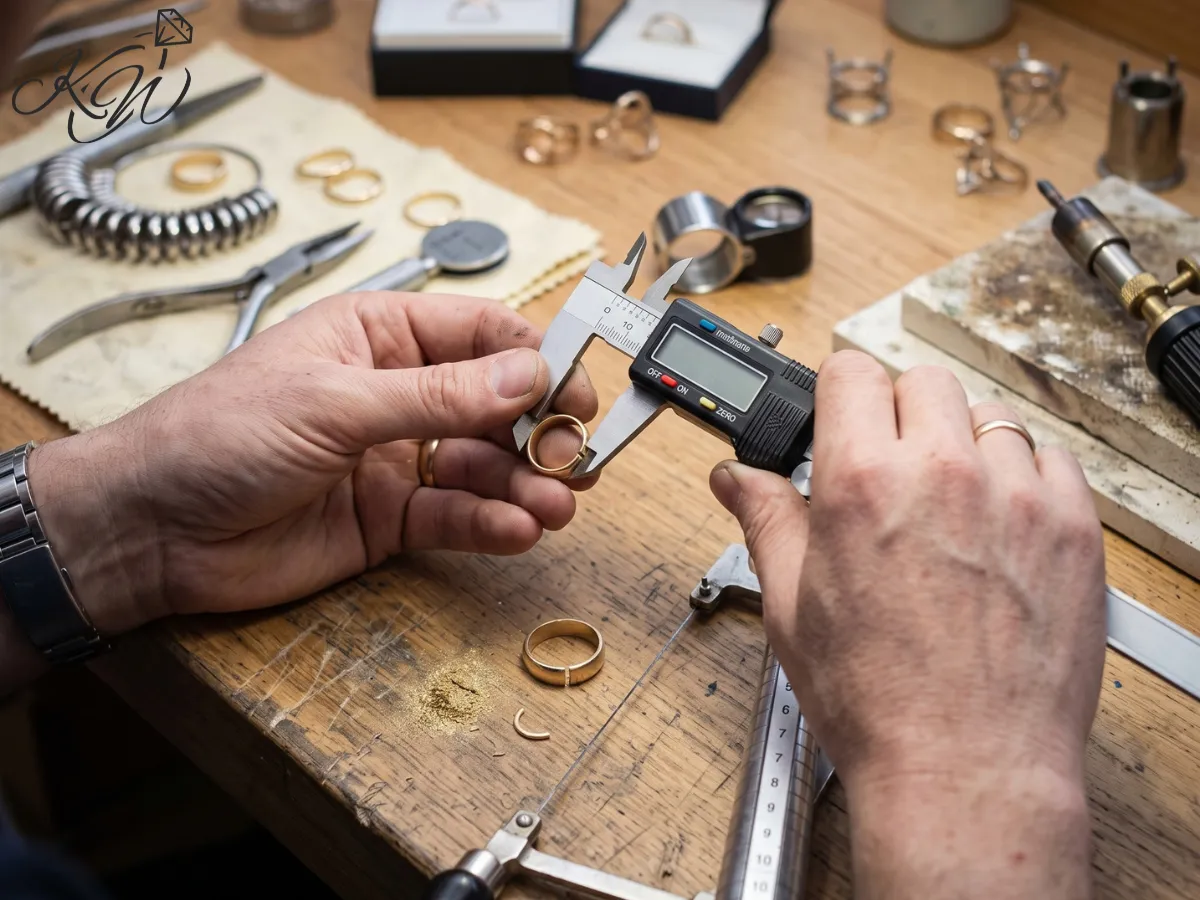
Your wedding band is one of the most meaningful pieces of jewelry you will ever wear. Over time, your body changes. Fingers swell in the summer, shrink in the winter, or change shape after life milestones. If your ring starts slipping off or feels too tight to wear, you are probably asking yourself: can wedding bands be sized?
The short answer is yes, most traditional wedding rings can be adjusted. However, the exact answer depends on the metal, the design, and how many stones sit around the band. At Ken Walker Jewelers, we believe in honest advice to help you protect both your investment and your sentimental memories. Resizing is a common service, but knowing how it works will help you choose the best path forward.
Key Takeaways
- Most gold, platinum, and sterling silver rings can be made larger or smaller with ease.
- Alternative metals like tungsten, titanium, and ceramic cannot be cut and soldered using traditional methods.
- Eternity bands with gems circling the entire finger are usually not candidates for standard size adjustments.
- Fingers change size naturally due to weather, diet, and age; temporary adjusters can help before you make permanent changes.
- Professional jewelers can stretch, cut, or add metal to achieve a comfortable, secure fit.
Can Your Wedding Band Be Adjusted?
When you notice your ring fitting differently, do not panic. It is completely normal for fingers to change size over months and years. In most cases, a skilled bench jeweler can adjust your ring up or down to make it comfortable again.
The process depends on two main factors:
- The base metal: Some metals melt and solder cleanly, while others are too hard or brittle.
- The structural design: Plain metal bands are easy to adjust, but complex patterns or full rows of gems create extra challenges.
A band that is too tight can cut off circulation and cause irritation. A ring that is too loose risks falling off during everyday activities like washing dishes or working in the yard. Finding the right balance keeps your jewelry safe on your hand where it belongs.
Ring Metals: Which Can and Cannot Be Sized?
The metal used to make your ring is the single biggest factor in determining whether it can be modified. Traditional precious metals are malleable, meaning they can be worked, cut, shaped, and soldered without ruining the structural strength of the piece. Modern alternative metals, on the other hand, behave very differently.
Metals That Can Be Adjusted
- Yellow Gold: Highly workable and traditional. Jewelers can heat, solder, and blend seams with little effort.
- White Gold: Easy to adjust, though it requires a fresh rhodium plating after the work is done to restore its bright silver finish.
- Rose Gold: Can be adjusted, but bench jewelers must work carefully because copper alloys make rose gold slightly more brittle than yellow gold.
- Platinum: Extremely durable with a high melting point. It requires specialized torches and tools, but it can be adjusted cleanly.
- Sterling Silver: A soft metal that adjusts easily, though it conducts heat quickly during the repair process.
Metals That Cannot Be Adjusted
- Tungsten Carbide: This metal is exceptionally hard and scratch-resistant, but it is brittle. It will shatter under pressure rather than bend or stretch, so it cannot be cut or soldered.
- Titanium: Titanium has an extremely high melting point and resists standard soldering methods. Most shops cannot adjust titanium bands.
- Cobalt Chrome: Similar to titanium, cobalt is very difficult to work with and rarely allows for size changes.
- Stainless Steel: Very tough to solder cleanly without specialized industrial equipment.
- Ceramic: Ceramic rings are molded into shape and will crack or break if any sizing pressure is applied.
|
Metal Type |
Can It Be Sized? |
Sizing Difficulty |
Notes |
|
Yellow Gold |
Yes |
Low |
Very easy to blend and polish clean |
|
White Gold |
Yes |
Low to Moderate |
Needs rhodium plating after work is finished |
|
Rose Gold |
Yes |
Moderate |
Can crack if bent too quickly; requires gentle heat |
|
Platinum |
Yes |
Moderate |
Requires high-heat equipment and platinum solder |
|
Sterling Silver |
Yes |
Low |
Simple to adjust; budget-friendly service |
|
Titanium |
No |
Very High |
Cannot be soldered with standard bench tools |
|
Tungsten |
No |
Impossible |
Will crack or shatter under pressure |
|
Stainless Steel |
Rarely |
Very High |
Most standard jewelry shops cannot alter it |
|
Ceramic |
No |
Impossible |
Brittle material; cannot be modified |
How Ring Style and Design Affect Sizing
Even if your ring is made of solid 14k gold, its design might limit how much it can change. The surface details, stone settings, and thickness all play a part.
Ring Design Complexity Scale:
Plain Metal Band --> Patterned Band --> Channel-Set Band --> Full Eternity Band
(Easiest to Size) (Hardest / Cannot Size)
Plain Metal Bands
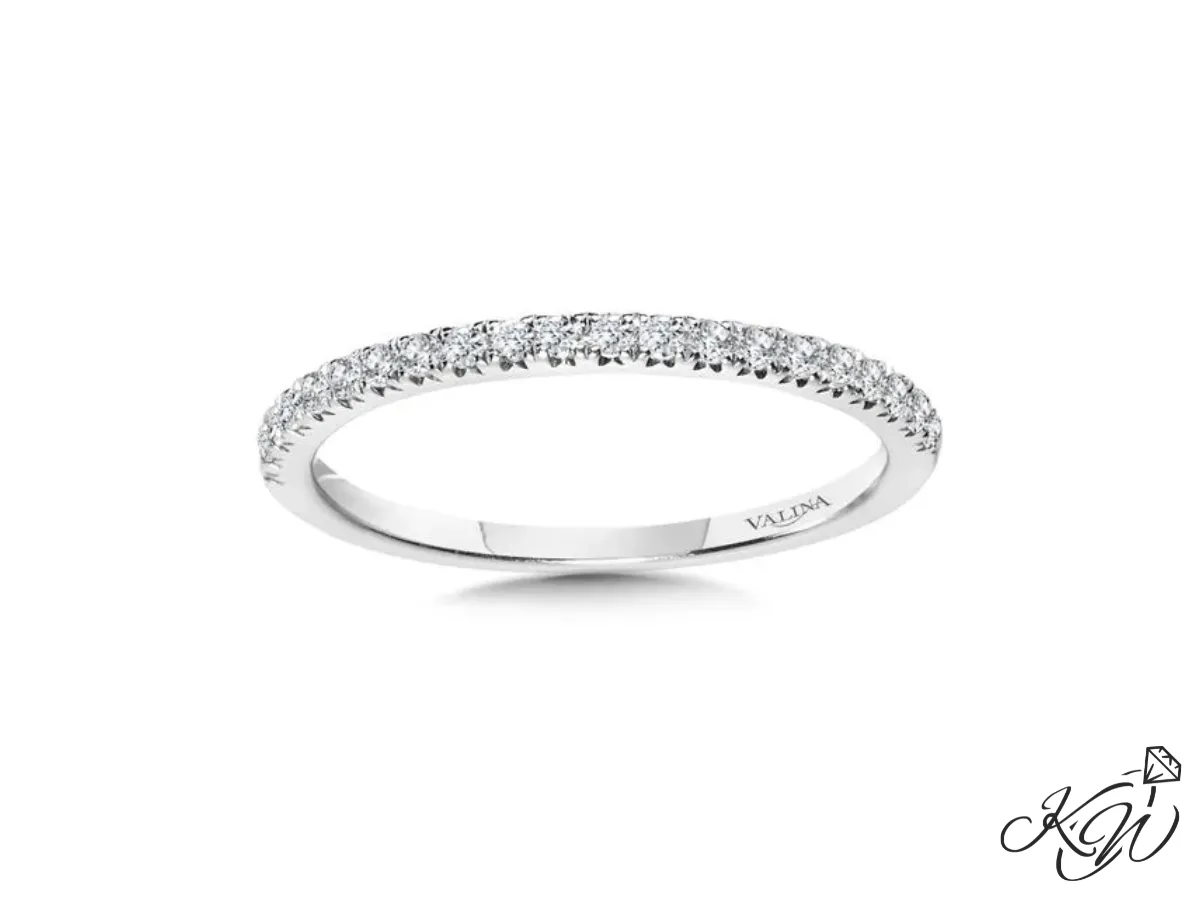
A classic domed or flat wedding band without gems is the easiest style to work with. There are no stones to loosen and no detailed patterns to disrupt. A jeweler can easily add or remove a small section of metal and polish the piece so the joint is invisible.
Eternity Bands
Eternity rings feature diamonds or gemstones that wrap completely around the entire circumference. Because there is no plain metal section at the back:
- There is no blank space to cut or add metal.
- Adding metal interrupts the spacing between gems.
- Bending the ring can loosen the prongs, causing stones to pop out.
If you have a full eternity band, your jeweler may suggest rebuilding the ring, replacing it, or using an internal insert instead.
Channel and Pavé Settings
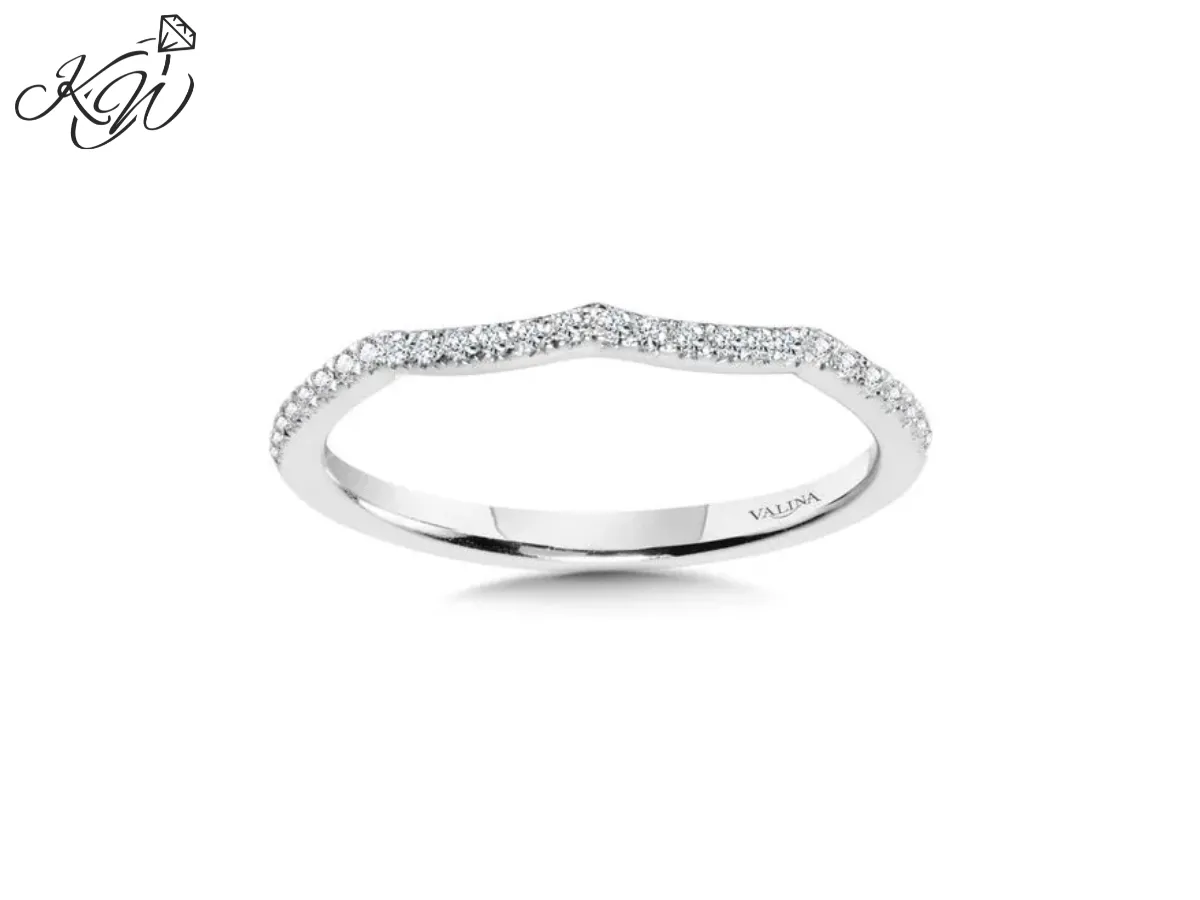
Bands with diamonds set halfway or three-quarters around the finger can usually be modified, but only within a limited range. Changing the curvature of the ring band shifts the tiny prongs or channels holding your diamonds. If you adjust the band more than one full size, stones may become loose. A good jeweler will always check and tighten every gem after completing the work.
Engravings and Surface Patterns
If your ring has an exterior pattern, such as milgrain edges, Celtic knots, or custom hand-carving, adjusting the size will interrupt that pattern at the seam. Similarly, interior laser engravings may be partially erased if the jeweler has to cut through that area. Skilled craftspeople can often re-engrave or restore patterns once the sizing is complete.
How Jewelers Make a Ring Smaller or Larger
Jewelers use specific techniques to alter the circumference of your band. The method chosen depends on how much the size needs to change and how the ring is constructed.
Making a Band Smaller (Downsizing)
When your ring is sliding off your knuckle, the jeweler follows these steps:
- Measuring: The bench jeweler measures your finger and calculates the exact millimeters of metal to take out.
- Cutting: A jeweler cuts through the back of the band (the shank) with a fine saw.
- Removing Excess Metal: The measured piece of metal is removed.
- Soldering: The two open ends are brought together and fused with matching solder using a torch or laser welder.
- Finishing: The jeweler polishes the seam until it is completely smooth and invisible to the naked eye.
Making a Band Larger (Upsizing)
Making a ring bigger can be done in one of two ways:
- Stretching: If a plain metal band only needs to go up by a quarter or half size, the jeweler can place it on a mechanical mandrel to stretch the metal slightly. This method requires no cutting or soldering, but it only works on plain bands made of durable metals. It cannot be used on thin bands, rings with stones, or patterned rings.
- Adding Metal: For larger size increases, or for bands with stones, the jeweler cuts the band at the base, spreads the gap to the target size, inserts a matching piece of gold or platinum, and solders both sides. The joint is then filed, rounded, and polished smooth.
Pro Tip: Stretching a band slightly thins the metal. If your ring is already thin or vintage, always ask your jeweler to add matching metal instead of stretching it. This protects the long-term strength of your band.
Smart Alternatives When Sizing Is Not an Option
What happens if your band is made of tungsten, or you have an eternity ring that cannot be cut? You still have sensible, budget-friendly options to make your ring fit snugly.
- Sizing Beads: A bench jeweler solders two small metal spheres onto the inside bottom of your band. These beads rest gently against the underside of your finger. They keep the ring upright, stop it from spinning, and reduce the fit by about a half size without altering the outside of the ring.
- Spring Inserts (Horseshoe Guards): A thin, spring-loaded metal band is installed along the inside of your ring. It flexes open so the ring passes over large knuckles, then hugs the base of your finger securely.
- Ring Guards and Wraps: These are external metal clips that snap onto the bottom of the band. They are an easy, temporary fix if you plan to address the fit permanently later.
- Silicone Ring Adjusters: Small, clear spirals of food-grade silicone wrap around the back of your band. They are comfortable, cost just a few dollars, and require zero modifications to your jewelry.
When Is the Right Time to Size Your Ring?
Before running to a jewelry shop, pay attention to when and why your ring feels off. Human hands expand and contract throughout the day based on several conditions.
Consider these common reasons for temporary finger changes:
- Temperature Changes: Cold winter air makes hands shrink, while hot, humid summer days make fingers swell.
- Time of Day: Many people wake up with swollen hands that settle back to normal by the afternoon.
- Diet and Sodium: Salty meals and alcohol can cause fluid retention that temporarily tightens rings.
- Pregnancy: Hormonal shifts and water retention often cause finger sizes to go up during pregnancy. Many mothers wait three to six months postpartum before deciding on permanent modifications.
- Fitness and Weight Fluctuations: Regular weight training can build hand muscle, while general weight loss or gain changes finger thickness over time.
If your band has felt loose or tight for several months through different seasons, it is time to have a professional take a look.
What to Expect During a Professional Sizing Service
Working with a local family-owned jeweler ensures you get clear guidance without any pressure. Here is what typically happens during your visit:
- Finger Measurement: The jeweler uses a set of metal sizing rings to find your exact size. They will evaluate both your knuckle width and the base of your finger.
- Ring Inspection: The jeweler checks the band for stone security, metal purity stamps, and signs of structural fatigue.
- Choosing the Method: The jeweler explains whether cutting, stretching, or an internal insert makes the most sense for your ring style.
- Timeline and Cost: Most standard size adjustments take anywhere from a few days to two weeks. The cost usually ranges from modest amounts for simple silver or yellow gold reductions to higher amounts for thick platinum rings that need extra metal added.
Frequently Asked Questions
Can all wedding rings be adjusted?
No. While most gold, platinum, and silver rings can be modified, alternative metals like tungsten, titanium, and ceramic cannot be altered using standard bench jewelry techniques. In addition, full eternity bands with gems circling the entire finger are usually not eligible for size adjustments.
How many sizes can a wedding band be changed?
Most plain bands can safely change up or down by two full sizes. Attempting to change a ring by three or four sizes can alter the round shape of the ring or put too much tension on the metal. Rings with channel or pavé stones should generally not be moved more than one full size to keep the stones secure.
Will resizing ruin the strength of my ring?
When completed by a qualified jeweler, the repair will not weaken your ring. The solder seam is blended and smoothed to match the rest of the band. However, adjusting the same ring multiple times over many years can make the metal brittle, so it is best to avoid frequent adjustments.
How should a wedding band properly fit?
A proper fit means the ring slides smoothly over your knuckle with light friction, rests comfortably at the base of your finger without pinching, and gives slight resistance when you try to pull it off. You should not have to force it, but it should never slide off on its own when you shake your hand.
Can you size a ring with an inscription inside?
Yes, but the cut might pass through some of the lettering. If your band has a sentimental date or message engraved inside, let your jeweler know before they begin. They will do their best to cut around the words or offer to re-engrave the inscription once the repair is finished.
Final Thoughts on Getting the Right Fit
Your wedding band represents an enduring commitment, and you deserve to wear it comfortably every single day. Whether your ring is slipping off during your morning routine or feeling uncomfortably snug, there is almost always a dependable solution.
From simple adjustments on classic gold bands to smart insert options for detailed designs, a skilled jeweler can restore the balance between beauty, security, and daily comfort. Take your time, monitor how your hands react across seasons, and visit your local jewelry professional for honest advice tailored to your piece.
Ready to find your perfect fit? Visit Ken Walker Jewelers today for friendly, expert ring sizing and care to keep your cherished jewelry safe on your hand for years to come.