
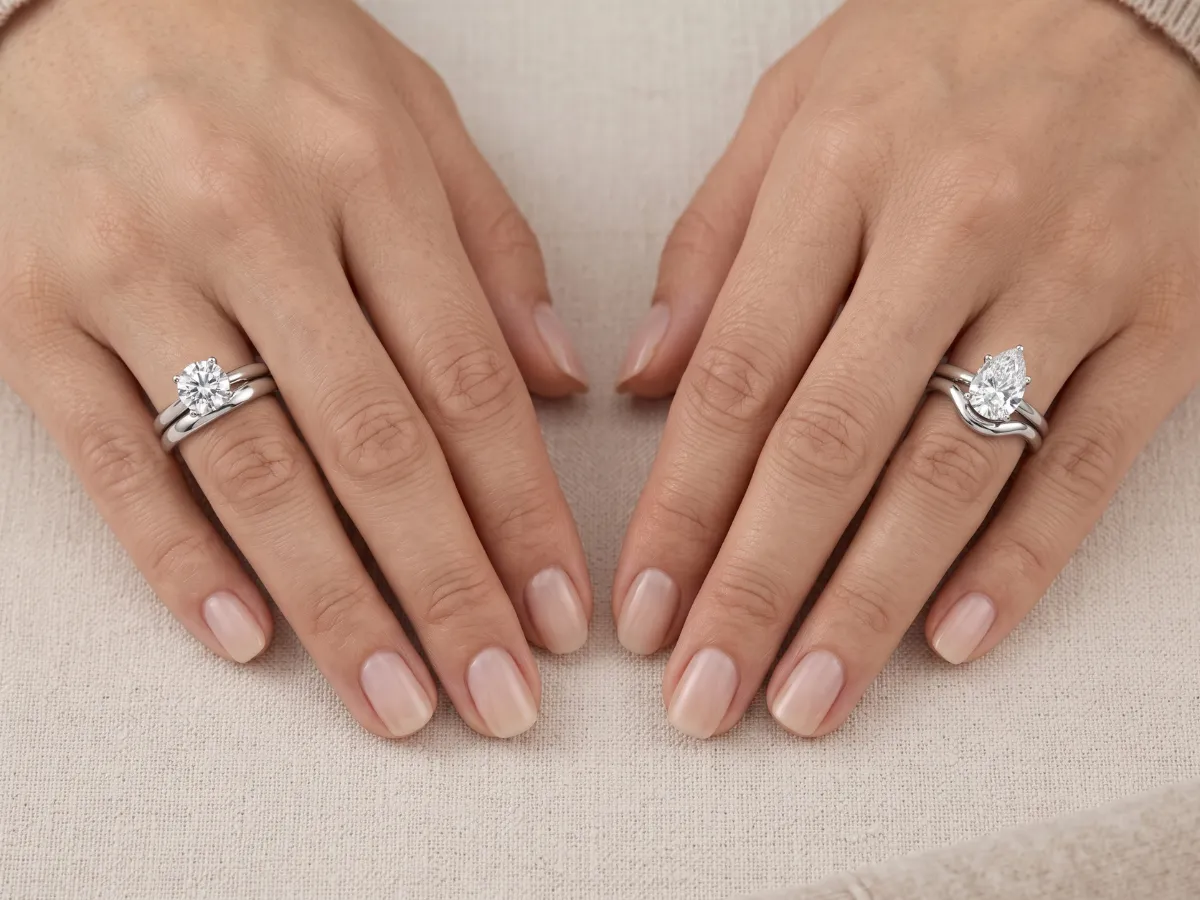
Finding the right wedding band to go with your piece can feel confusing. When you start matching engagement rings with wedding bands, you want a pair that looks great and feels comfortable every day. Your wedding stack is something you will wear for years to come, so taking time to think about your options is a smart step.
At Ken Walker Jewelers, we believe buying jewelry should be fun, clear, and stress-free. You do not need to follow strict old rules to get a great look. Whether you want a set that locks together neatly or a mixed-metal combination that shows off your personality, this guide will help you pick the right match.
Key Takeaways
- Comfort Comes First: Choose a band profile and thickness that feels natural on your finger for daily wear.
- Metal Matters: Pairing metals with similar hardness prevents one ring from scratching the other over time.
- Fit Options Vary: You can choose a flush fit, a curved contour band, or leave a slight gap between your rings.
- Mix or Match: Mixing metals or adding colored stones is a great way to show personal style.
- Budget Options Exist: You do not need to spend a fortune to create a beautiful, lasting ring combination.
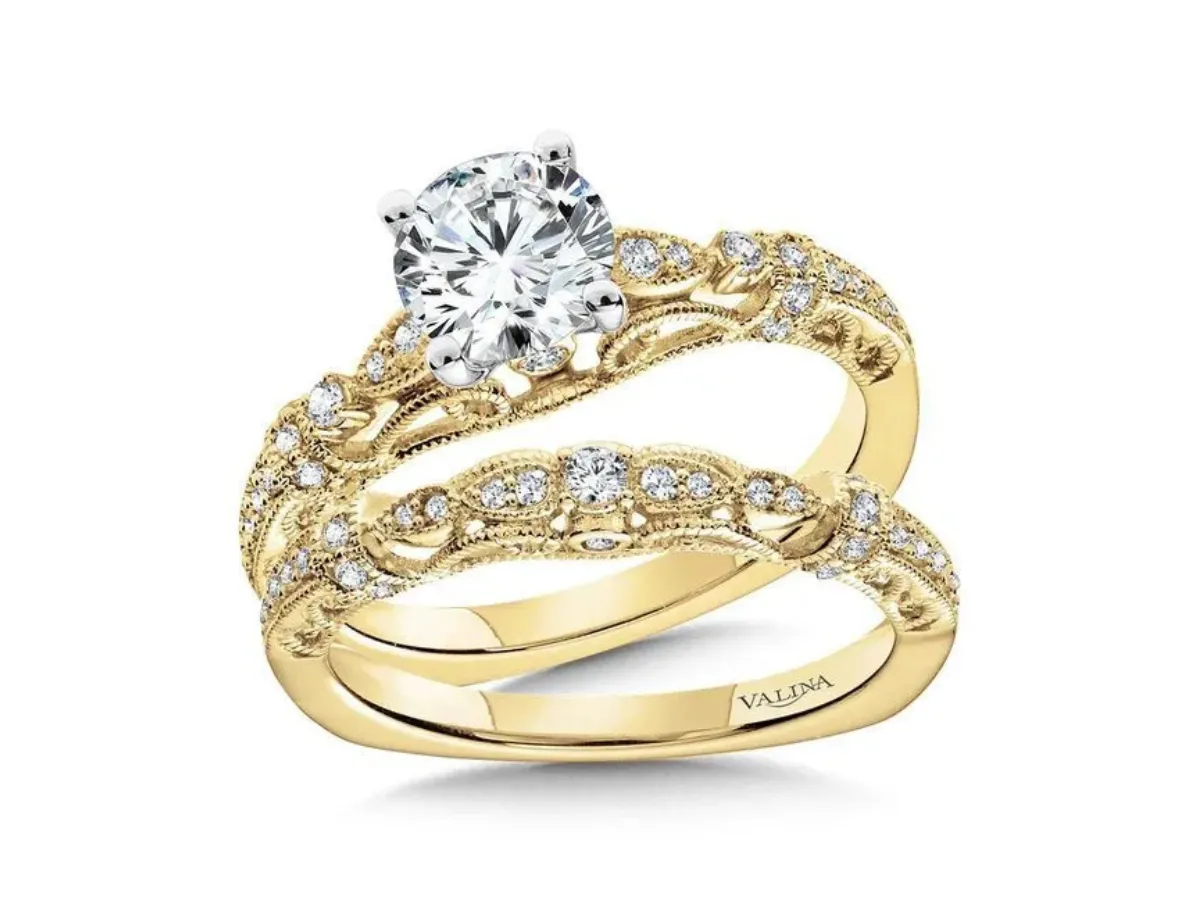
Simple Rules for Pairing Your Rings
Before you pick out a wedding band, it helps to keep a few basic ideas in mind. The goal is to find a ring that sits nicely next to your center stone while staying comfortable.
Here are the main things to check when you try on options:
- Ring Width: Look at the width of your band compared to your ring band. A wide engagement band often looks best with a thinner, simple wedding ring. A thin engagement band can handle a wider or thicker wedding band.
- Ring Profile: Check the height of your center stone setting. A high setting allows a straight band to slide right underneath it. A low setting may require a curved or notched band to sit flush.
- Lifestyle and Daily Use: Think about what you do with your hands every day. If you work with your hands or lead an active lifestyle, a low-profile band with secure stone settings might be the best choice.
- Personal Preference: Some people love a balanced look where both rings look identical in style. Others prefer a stacked look with mixed textures and shapes.
Matching Metal Types and Durability
One key part of matching engagement rings with bands is choosing your precious metals. You can choose to match your metals exactly, or you can mix them for a unique look. However, metal hardness plays a big role in how your rings wear over time.
Choosing the Right Metal Pairings
Different metals have different levels of hardness. When two rings rub together every day, a harder metal can slowly wear down a softer metal.
- Platinum with Platinum: Platinum is dense and strong. Wearing two platinum rings together keeps both pieces safe from unusual wear.
- 14k Gold with 14k Gold: 14k gold is a great middle ground for daily durability. Pairing white, yellow, or rose 14k gold rings together works very well.
- 18k Gold with 18k Gold: 18k gold is softer than 14k gold because it contains more pure gold. It is best to pair 18k gold with another 18k gold piece.
- Mixing Metals Safely: If you want to pair yellow gold with white gold, try to stay within the same karat weight (such as both being 14k) to keep the wear pattern even.
Pro Tip: If you pair a very hard metal like titanium or cobalt with a gold ring, the harder band can rub away the gold over time. Keep metals similar in hardness to protect your set.
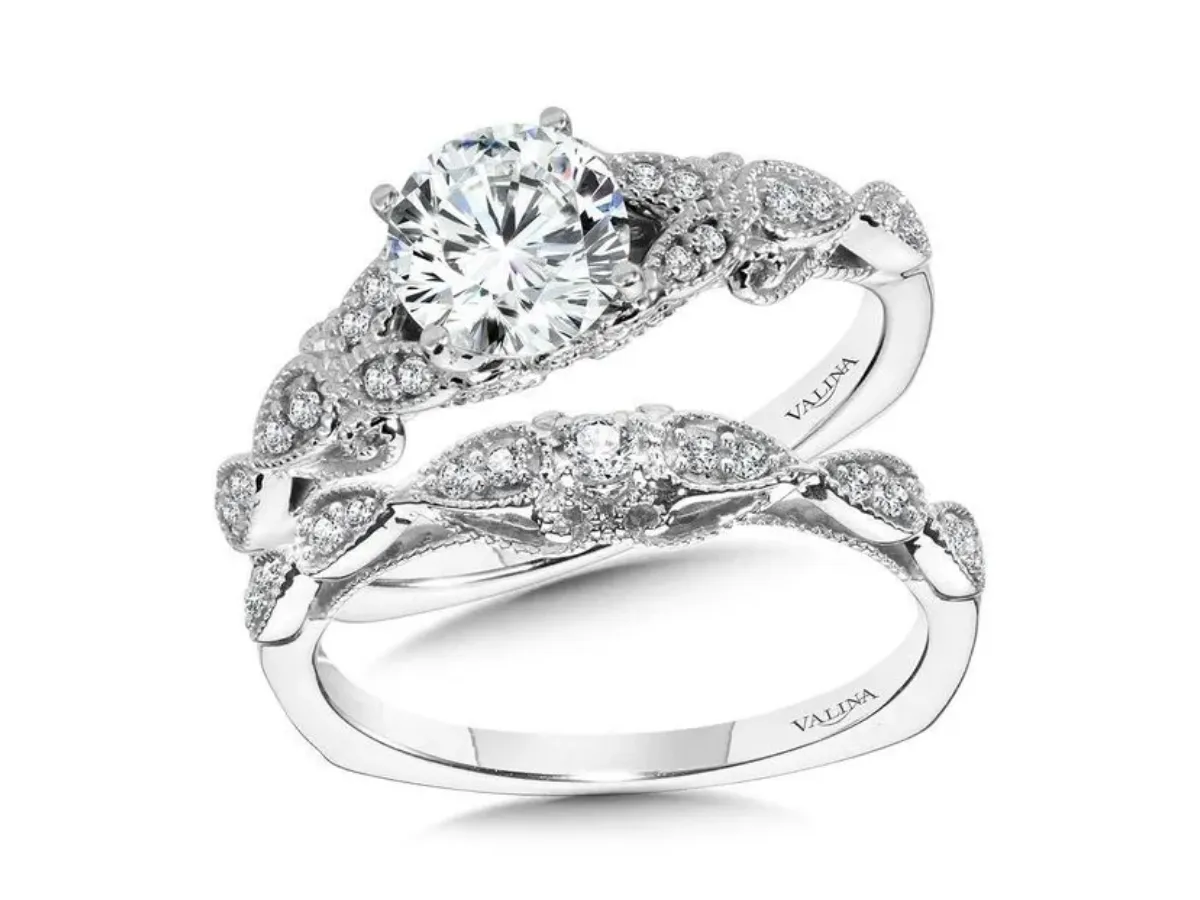
Choosing Bands for Specific Engagement Ring Styles
The shape and setting of your center ring will narrow down your band choices. Here is how to match bands based on popular ring styles.
Solitaire Engagement Rings
Solitaire rings feature a single central stone. Because of their classic design, they are the easiest to match.
- Straight Diamond Bands: Adds extra shine while letting the center diamond remain the main focus.
- Plain Metal Bands: Gives a clean, timeless appearance that is low-maintenance.
- Eternity Bands: Features diamonds all the way around the ring for full glitter from every angle.
Halo Engagement Rings
Halo rings feature a center stone surrounded by a circle of smaller diamonds. Because the head of the ring is wider, a straight band might not sit close.
- Contour Bands: These bands curve gently around the halo to eliminate any empty space.
- Thin Pavé Bands: A narrow band with small set diamonds sits under the halo without drawing attention away from the head.
Three-Stone Engagement Rings
Three-stone rings have a larger center stone flanked by two side stones. This creates a wider footprint on your finger.
- Notched Bands: Feature a small cutout that allows the band to tuck under the center section.
- Low-Profile Band: Sits flat on the finger so it does not crowd the side stones.
Flush Fit vs. Curved Fit: Finding the Right Gap
When you put your two rings together, you need to decide if you want them to sit flush with zero gap, or if you are comfortable with a small space between them. Neither option is wrong; it comes down to what you prefer to see on your hand.
Here is a quick look at the main fit types:
- Flush Fit: The wedding band sits directly against the engagement ring with no space visible between the two metal bands.
- Curved (Contour) Fit: The band is shaped with a custom curve to hug the exact outline of your main stone setting.
- Ring Guard or Jacket: A double-sided band that your engagement ring slips into, framing your ring on both sides.
- Intentional Gap: A straight wedding band is worn next to a low-set ring, leaving an open space between the two. Many people prefer this look because it highlights each ring as a distinct piece of jewelry.
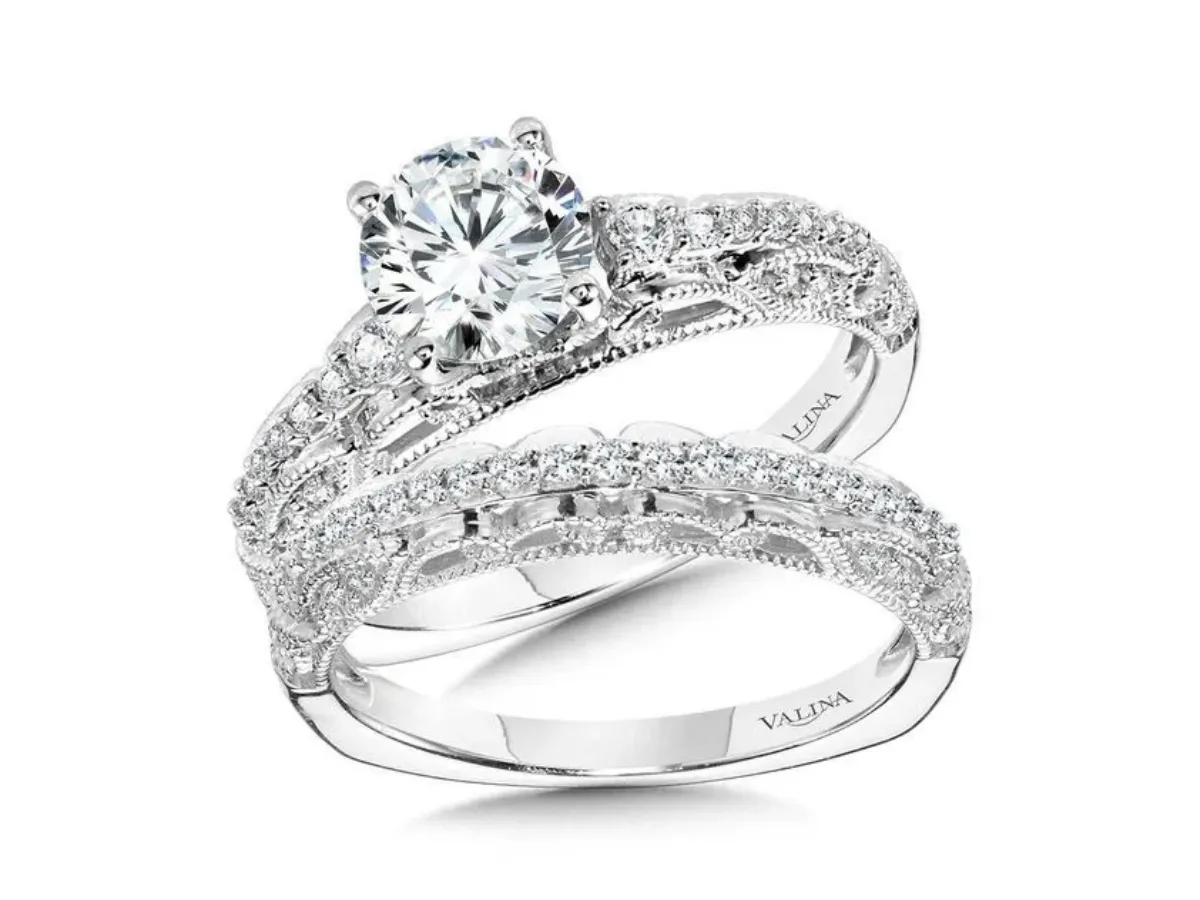
Ring Pairing Comparison Chart
To help you compare your options quickly, use this simple summary guide:
|
Band Style |
Best Matched With |
Main Advantage |
Point to Consider |
|
Straight Plain Band |
Solitaire, High-Set Rings |
Timeless look, easy to wear alone |
May leave a gap on low-set rings |
|
Straight Diamond Band |
Solitaire, Three-Stone Rings |
Adds brightness and contrast |
Diamonds may rub against prongs if not checked |
|
Contour (Curved) Band |
Halo, Low-Set Oval or Pear Stones |
Fits tight with no gap |
May look unusual when worn by itself |
|
Ring Jacket / Guard |
Simple Solitaires |
Transforms the ring into a bold set |
Takes up more room on the finger |
|
Eternity Band |
Any High-Set Setting |
Full diamond coverage from all sides |
Harder to resize later on |
Smart Budget Advice for Wedding Sets
Building a beautiful bridal set does not mean you have to break your budget. At Ken Walker Jewelers, we love helping couples find affordable options that look beautiful and last for decades.
Here are a few smart ways to plan your purchase:
- Consider Alternative Stones: You do not need traditional mined diamonds for your wedding band. Moissanite and lab-grown diamonds offer great brightness and high durability at a lower cost point.
- Choose a Plain Band Now, Add Diamonds Later: Starting with a simple metal band keeps initial costs low. You can always add an anniversary band with diamonds down the road.
- Look for Matching Bridal Sets: Buying a matched set designed together from the start can save money compared to buying two separate custom pieces.
- Mix Vintage and New Pieces: Pairing a family heirloom band with a new ring creates a personal look with deep emotional meaning while keeping costs reasonable.
Frequently Asked Questions
Should your wedding band match your engagement ring metal?
They do not have to match. While matching metals creates a uniform look, mixing metals like white gold and rose gold is very popular. Just ensure the metals have similar hardness levels to avoid unnecessary wear.
What if my engagement ring sits low on my finger?
If your main stone sits low, a straight band will leave a visible space between the two rings. If you want them to touch, choose a contoured band that curves around the center head, or select a band with a small notch.
Can you wear a straight wedding band with a solitaire ring?
Yes. Solitaire settings usually have high mountings, which allow standard straight bands to slide directly beneath the center stone for a flush fit.
Is it okay to wear your wedding band alone sometimes?
Yes. Many people choose a plain metal band or a sturdy channel-set diamond band specifically so they can wear it solo while traveling, exercising, or working.
Need help finding the right match for your ring? Visit Ken Walker Jewelers today to try on a wide selection of wedding bands with honest advice from our team.